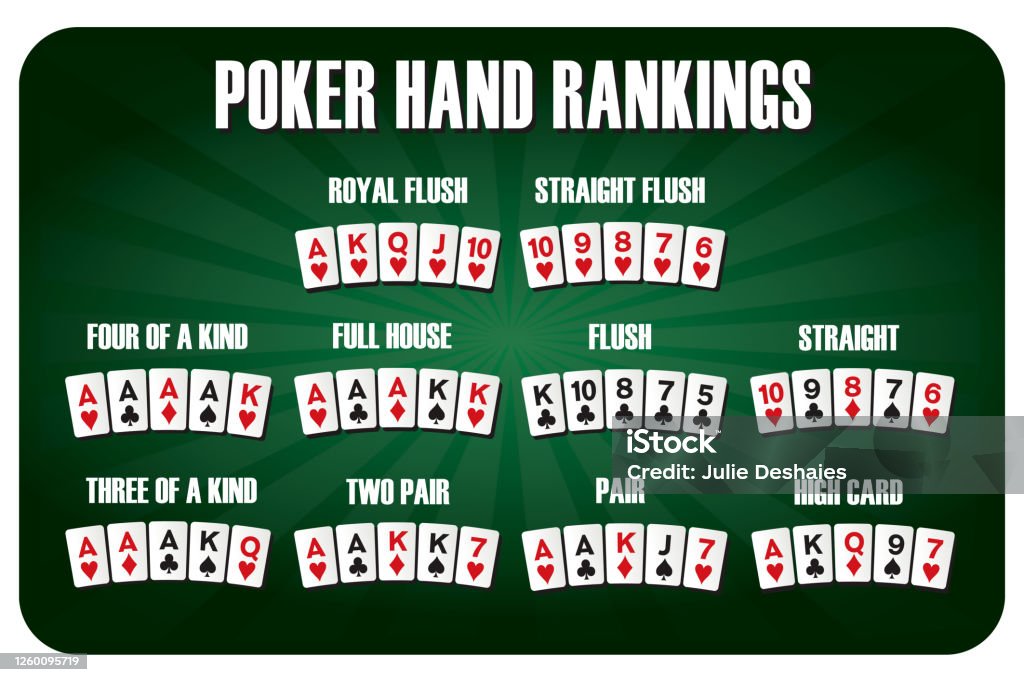
In any strategic card game, a standardized scoring system is necessary to evaluate combinations and determine the outcome of a round. For Texas Hold’em, this ranking system is universally fixed, ensuring that participants worldwide operate under the exact same mathematical rules. A fundamental aspect of learning this mind sport involves memorizing the hierarchical structure of card combinations. This article provides an objective, informational breakdown of standard 德州扑克牌型, detailing each combination from the highest possible value to the lowest according to international rules.
The Foundation of Five-Card Combinations
Before exploring the specific categories, it is important to understand the structural logic behind the combinations. Under traditional rules, a complete hand always consists of exactly five cards. Even though a participant has access to a total of seven cards by the final stage of a round (two private hole cards and five shared community cards), they can only select the best five cards to form their final combination.
The value of any given combination is determined by its mathematical rarity. Combinations that are highly unlikely to occur hold the highest ranking, while combinations that appear frequently sit at the bottom of the hierarchy. If two participants hold the same category of combination, specific tie-breaking rules—such as evaluating the highest individual card value within that combination—are applied to determine the outcome.
High-Ranking Combinations: Exceptional Rarity
The top tier of the ranking structure consists of combinations that occur very rarely during standard gameplay. These hands require specific card sequences and matching suits.
The Royal Flush and Straight Flush
The absolute highest possible combination within the standard 德州扑克牌型 framework is the Royal Flush. This exceptional hand consists of an Ace, King, Queen, Jack, and Ten, all belonging to the exact same suit. Directly below it is the Straight Flush, which consists of any five numerical cards in consecutive order that also share the same suit (for example, a Five, Six, Seven, Eight, and Nine of Diamonds).
Four of a Kind
Next in the hierarchy is Four of a Kind, often referred to as “Quads” in casual terminology. This combination occurs when a hand contains all four available cards of the exact same numerical rank, paired with any single fifth card (known as the kicker). For instance, holding four separate Jacks alongside a King constitutes a Four of a Kind.
Mid-Tier Combinations: Balancing Suits and Sequences
The middle tier of the hierarchy involves combinations that require matching numerical values across different suits, or consecutive sequences across mixed suits.
Full House
A Full House is a strong combination composed of three cards of one specific numerical rank combined with two cards of another numerical rank. An example of this would be holding three separate Kings and two separate Queens. When comparing two separate Full House hands, the individual holding the higher-ranking set of three cards takes precedence.
Flush
A Flush consists of any five cards that belong to the exact same suit, regardless of their numerical sequence. If the cards do not run in consecutive order but all display the same symbol (such as five separate Heart cards), it is categorized as a Flush. If multiple individuals hold a Flush, the hand with the single highest card wins.
Straight
A Straight is formed by five cards in consecutive numerical sequence belonging to mixed suits. An example would be an Two of Hearts, Three of Clubs, Four of Spades, Five of Diamonds, and Six of Hearts. In this category, an Ace can act as either the highest card in a sequence (Ten through Ace) or the lowest card (Ace through Five).
Lower-Tier Combinations: Frequent Formations
The lowest tier of the 德州扑克牌型 hierarchy involves basic pairings and individual card values. These combinations appear most frequently during a standard game.
Three of a Kind
Three of a Kind occurs when a five-card hand contains three individual cards of the exact same numerical rank, accompanied by two unrelated cards. For example, holding three separate Sevens along with an Ace and a Four forms Three of a Kind.
Two Pair and One Pair
- Two Pair: This combination consists of two distinct sets of matching pairs, alongside a single fifth card. For instance, holding two Aces and two Tens constitutes Two Pair.
- One Pair: A very common occurrence, this hand contains two cards of matching numerical rank, with three completely unrelated cards making up the rest of the five-card structure (such as holding two Nines).
High Card
When a five-card hand fails to meet the criteria for any of the categories listed above—meaning there are no pairs, no consecutive sequences, and mixed suits—the hand is evaluated simply as a High Card. The value is determined entirely by the single highest-ranking card in the hand, with the Ace being the most valuable individual card under standard rules.
Conclusion: The Structural Core of Gameplay
Understanding the standard 德州扑克牌型 is the most essential step in comprehending how Texas Hold’em operates as an intellectual mind sport. This fixed hierarchy removes ambiguity from the game, providing a clear mathematical framework that governs every showdown. By organizing combinations based on their statistical probability, the rules ensure a fair, standardized, and globally consistent method for evaluating performance at the table.